Description
Atlantis Ludwigia (Ludwigia repens ‘Atlantis’)
Species Background
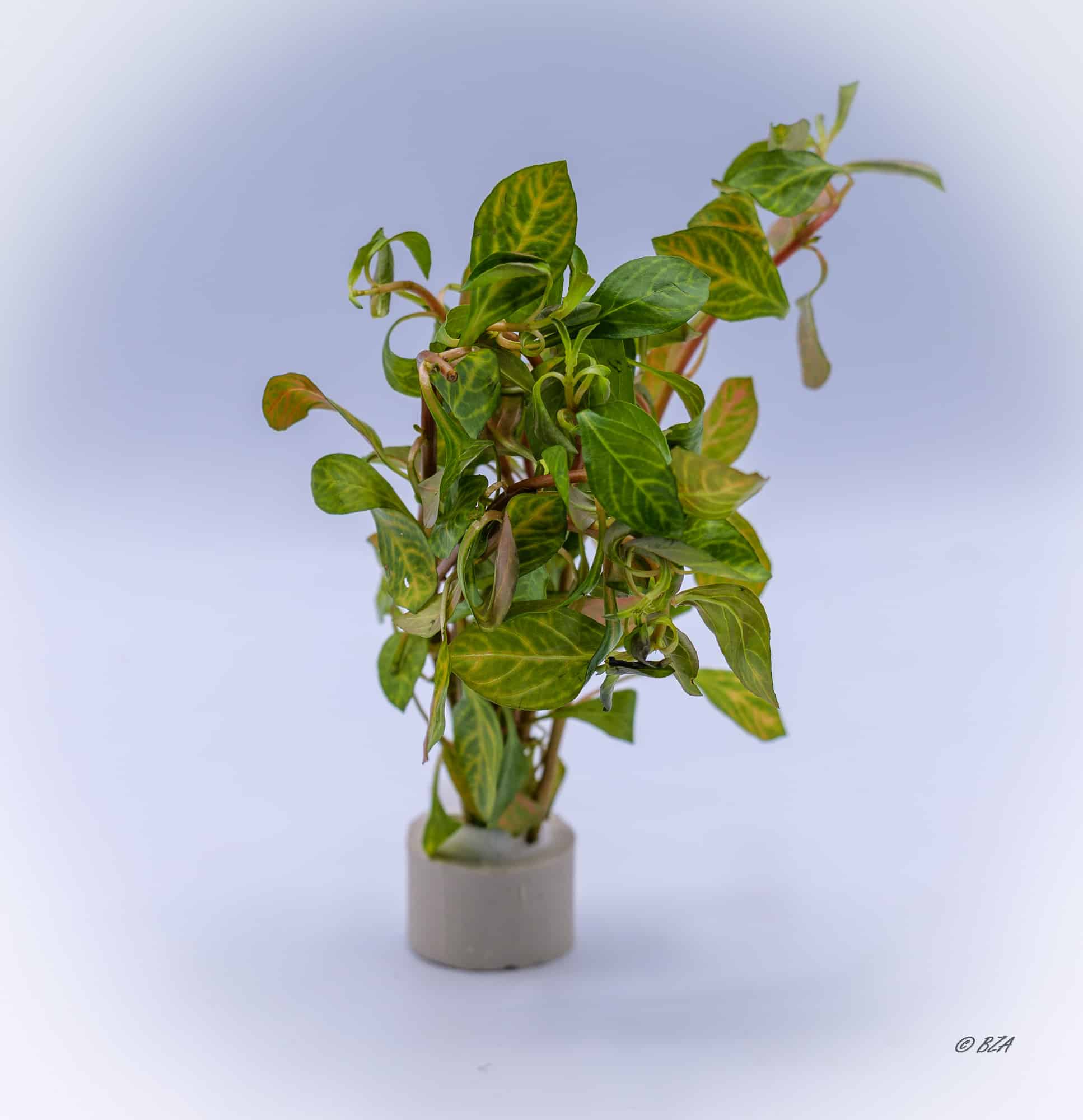
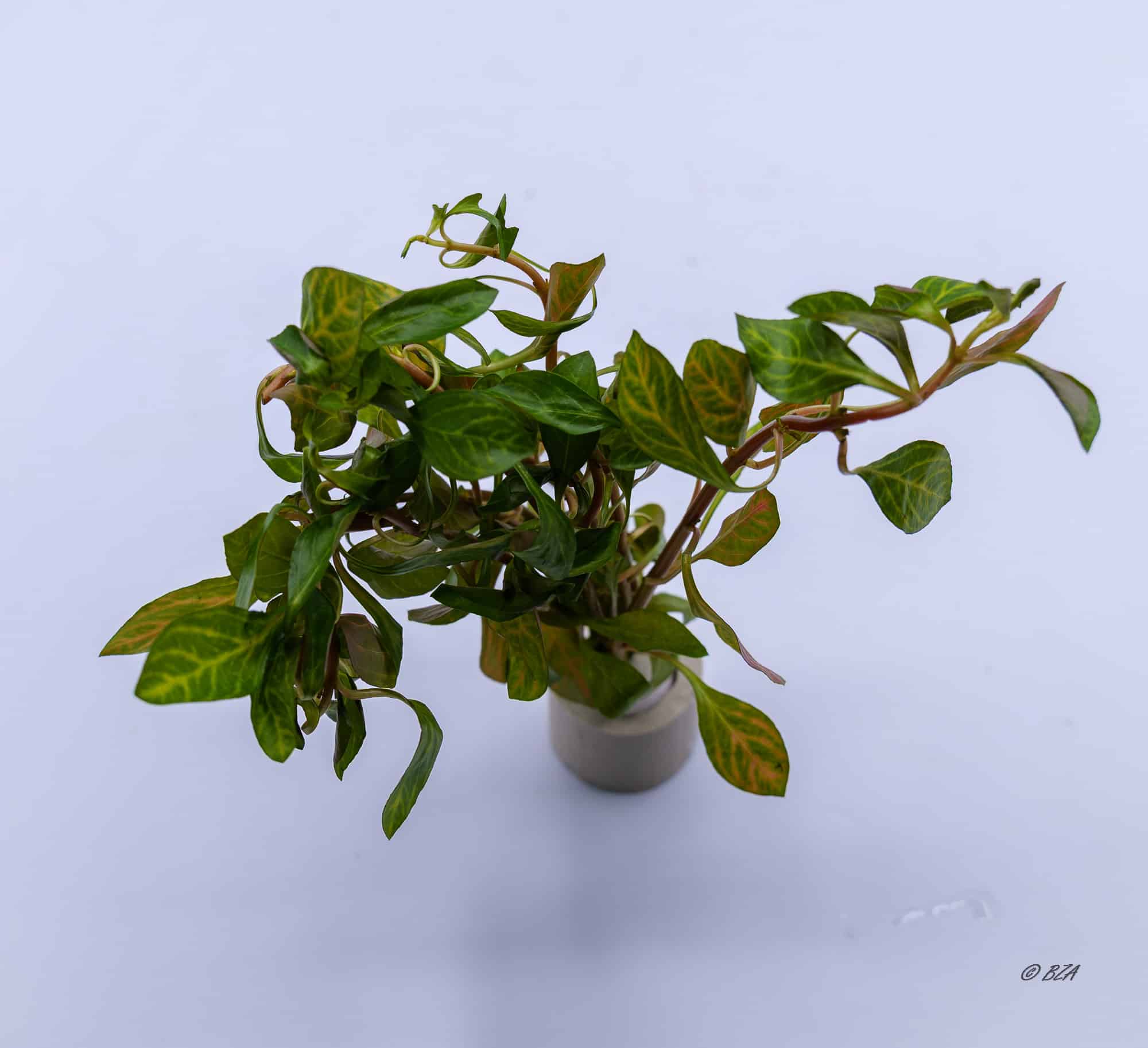
Ludwigia repens ‘Atlantis’ is a cultivated variegated form developed for aquarium use, not a naturally occurring wild phenotype. While Ludwigia repens as a species is native to slow-moving rivers, floodplains, and marshy edges of North and Central America, the cream, pink, and pale green striping seen in ‘Atlantis’ is the result of selective propagation under controlled nursery conditions.
This variety is maintained vegetatively and does not reliably reproduce its coloration from seed.
Growth Behavior
A stem plant with slower growth than standard Ludwigia repens due to reduced chlorophyll in the variegated tissue. It grows upright with moderate internode spacing and produces lateral shoots after trimming. Growth is steady but not aggressive, and it responds poorly to unstable conditions.
Size and Growth Form
Submerged height typically ranges from 6–12 inches under aquarium conditions. Stems remain relatively slender, with oval to slightly elongated leaves. Variegation is strongest on newer growth when conditions are stable. Shrimp and small fish frequently graze along the lighter leaf margins.
Aquascaping Tip
Use in small groups as a midground accent where its variegation contrasts against darker green plants rather than competing with them.
Water Parameters
Temperature: 72–80°F
pH: 6.0–7.4
GH: 4–10 dGH
KH: 2–6 dKH
Compared to standard repens, ‘Atlantis’ shows reduced tolerance for extremes. Softer, slightly acidic to neutral water helps preserve coloration and leaf integrity.
Light Requirements
Medium to high light. Insufficient light causes loss of variegation and reversion toward pale green growth. Very high light without nutrient balance can cause leaf thinning or melt.
CO₂ Requirements
Strongly recommended. CO₂ is not optional if consistent variegation and compact growth are the goal. Without CO₂, growth slows significantly and color fades.
Nutrient Requirements
Primarily a water-column feeder. Requires consistent macro and micronutrient availability. Iron plays a key role in maintaining pink and cream tones, but excess iron without balance can destabilize growth.
Tank Placement
Midground to background depending on trimming. Best planted in clusters of multiple stems for visual coherence.
Why Aquarists Keep It
Kept for its rare, soft variegation and controlled growth habit that adds visual texture without dominating a layout. It offers contrast without the intensity of deep red stem plants.
Jason O. (verified owner) –