Description
Species Background
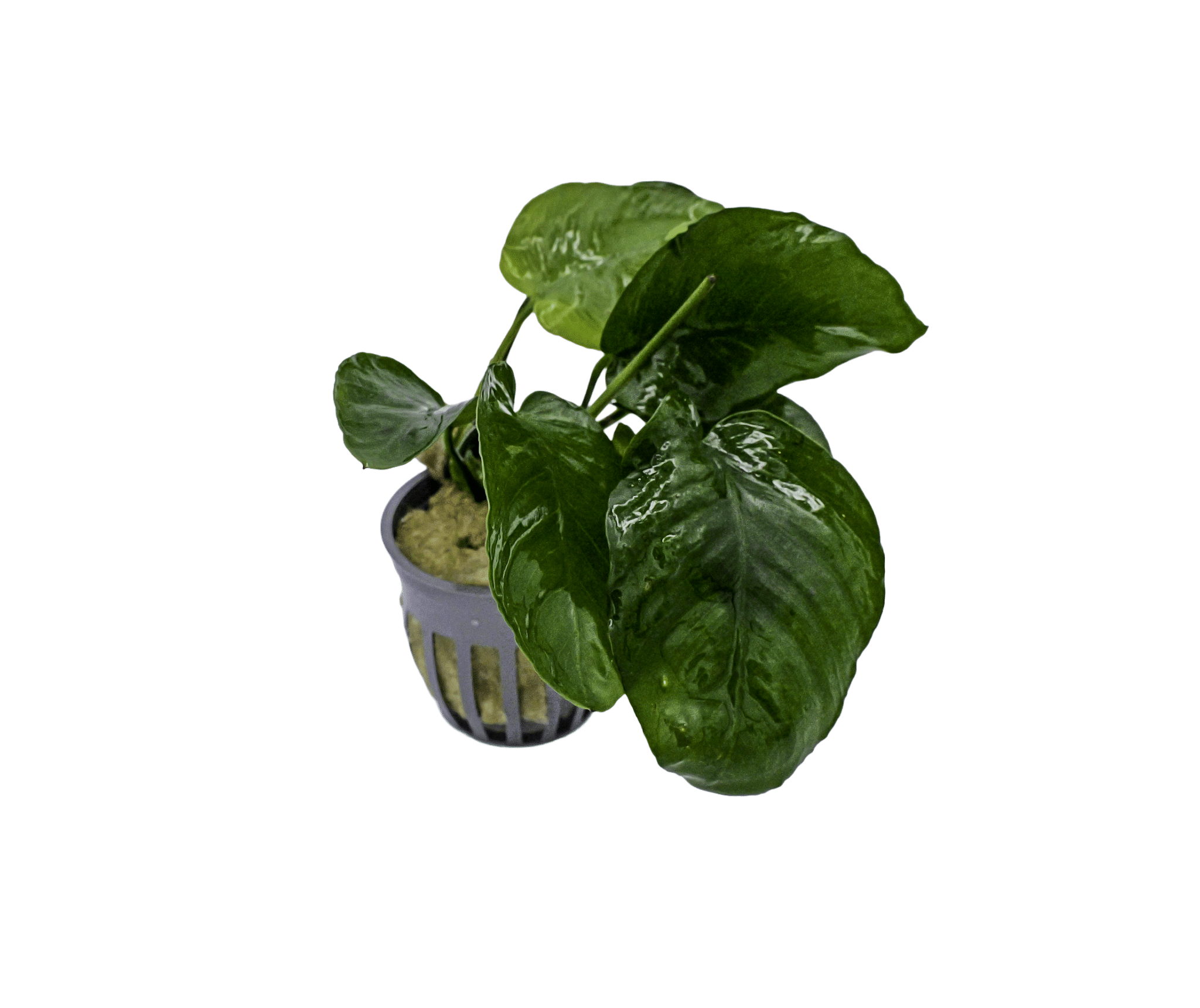
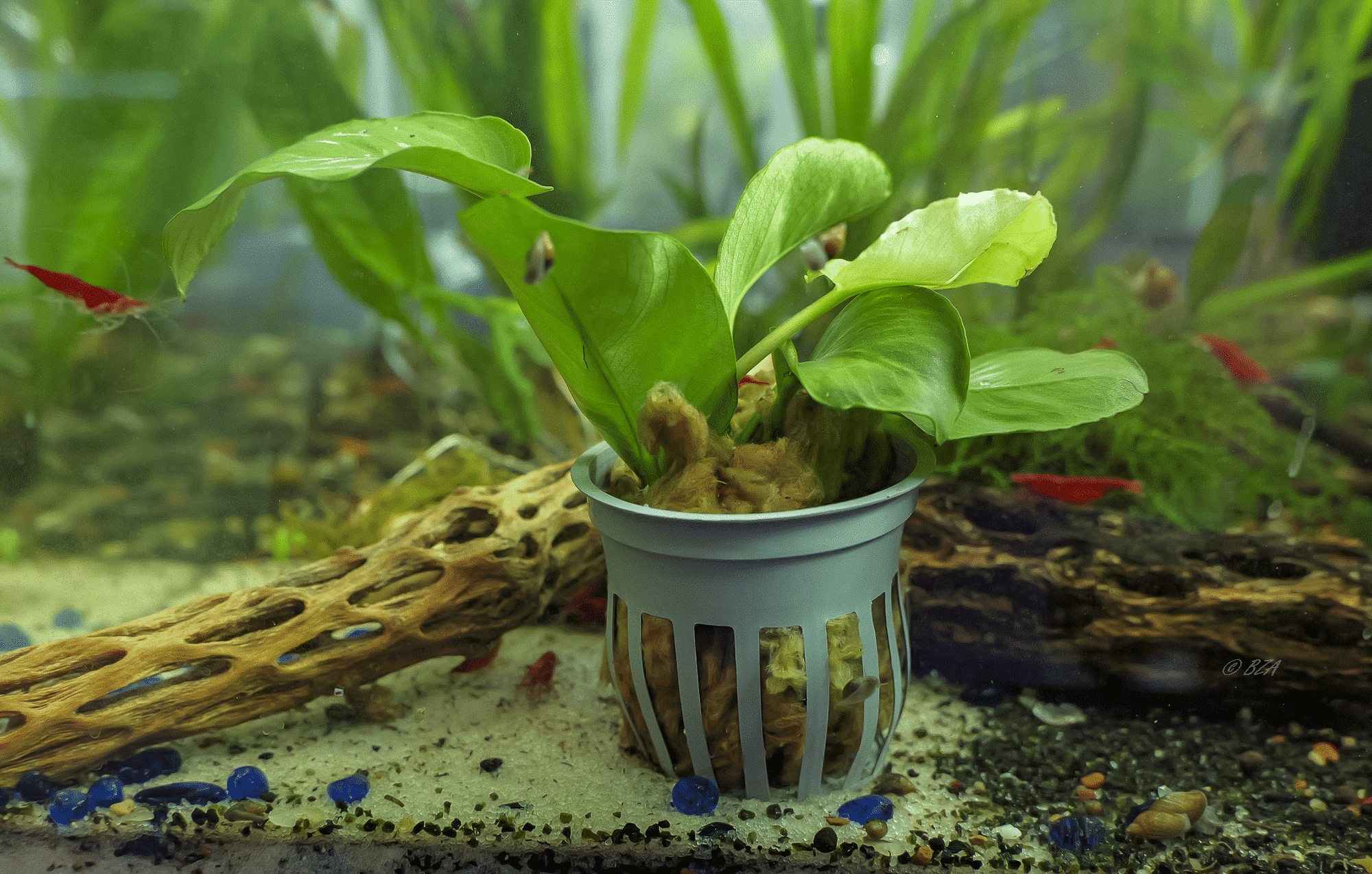
Anubias barteri Round Leaf grows along shaded riverbanks and slow-flowing waterways in West Africa, often half-submerged on roots and rocks. It’s a tough, broad-leaved plant that developed its round shape as an adaptation to low light and moving water. In aquariums it feels right at home, settling in like it’s claiming a quiet corner of the river for itself.
Shrimp graze on the biofilm that collects on its thick leaves, and small fish use the plant as a dependable little safe zone the same way they would in the wild.
Growth Behavior
This is a classic slow-growing epiphyte. It spreads by extending a firm rhizome that creeps across wood or stone. The plant grows steadily, forming heavy, glossy, rounded leaves that stay strong even in low-energy tanks. It does not want its rhizome buried and remains stable when attached securely.
Size and Growth Form
Anubias barteri Round Leaf becomes a substantial plant over time. Mature clumps often reach 8 to 12 inches across with leaves several inches long and wide. Height varies with environment but commonly sits around 6 to 10 inches. When left undisturbed it develops into a dense, rounded mass that acts like a natural anchor point in the aquascape. Shrimp and small fish weave through it as if it were a permanent fixture in their territory.
Water Parameters
Temperature: 72 to 82 F
pH: 6.0 to 7.8
GH: 3 to 12
KH: 2 to 8
These ranges reflect the tolerance observed in long-term aquarium cultivation, where barteri adapts well to a wide spectrum of stable conditions.
Light Requirements
Low to medium light.
High light is unnecessary and may promote algae on the broad leaves. In gentle light it stays compact, healthy, and relaxed, like a plant that knows how to take its time.
CO2 Requirements
CO2 is optional. Growth speeds up with supplementation, but the plant remains perfectly reliable in low-tech tanks. Without CO2 it grows slowly but consistently.
Nutrient Requirements
Primarily a water-column feeder. Occasional liquid nutrients help maintain deep green leaves. Keep the rhizome above substrate to prevent rot.
Tank Placement
Best in midground positions or as a feature plant attached to stone or wood. Its broad leaves and dense final form create natural cover, grazing zones, and visual weight in both nano and large displays.
Why Aquarists Keep It
• Thick, bold, long-lived leaves that look good in any setup
• Excellent habitat for shrimp and small fish
• Works in low-tech and high-tech environments
• Provides structure without crowding the tank
• Durable, forgiving, and visually striking
Reviews
There are no reviews yet.