
Description
Species Background
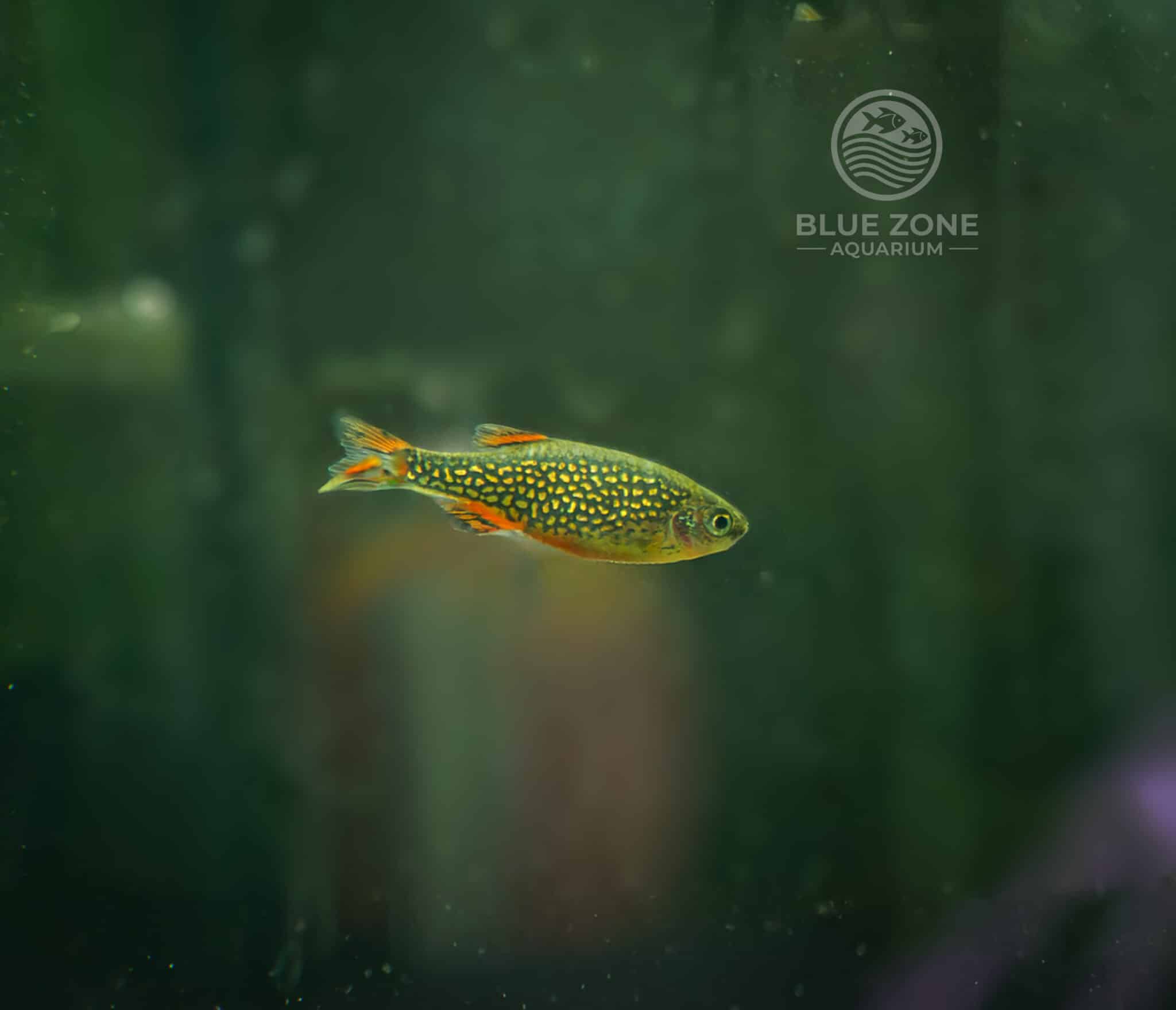
The Celestial Pearl Danio originates from shallow, vegetation-dense ponds in Myanmar. Discovered in 2006, it quickly became one of the most sought-after nano fish in the aquarium hobby due to its exceptional coloration and manageable size.
Wild habitats consist of still or slow-moving water with dense plant growth and soft substrates. Nearly all specimens available today are tank-bred and adapt well to stable home aquarium conditions.
Behavior and Temperament
Celestial Pearl Danios are peaceful nano schooling fish with mild territorial displays between males.
• Best kept in groups of 8 or more
• Males may posture but rarely injure one another
• Naturally shy in sparsely decorated tanks
They prefer planted environments where they can weave through cover. In well-structured aquascapes, they display confidently and show stronger coloration.
Adult Size
Adults typically reach 1 inch in length.
Most specimens are sold between 0.5–0.75 inches.
Water Parameters
Temperature: 72–78°F
Safe broader tolerance: 70–80°F
pH: 6.5–8.0
GH: 4–15 dGH
KH: 2–10 dKH
Tank-bred specimens tolerate moderately hard and slightly alkaline water when stable. Stability is more important than chasing a specific number.
Diet
Omnivorous micropredators.
Primary diet should include:
• Quality micro pellets
• Crushed flake
• Frozen cyclops
• Baby brine shrimp
• Daphnia
Food size should be small due to their compact mouths.
Tank Requirements
Minimum tank size: 10 gallons
Larger tanks are recommended for proper schooling behavior.
Aquascape preferences:
• Heavy plant cover
• Fine substrate
• Gentle to moderate flow
• Established biological filtration
They thrive in mature aquariums with stable parameters.
Compatibility
They coexist well with:
• Other peaceful nano fish
• Small rasboras
• Small Corydoras species
• Dwarf shrimp (fry may be eaten)
Avoid housing with larger or aggressive species.
Why They’re Popular
These fish are popular because they combine striking coloration with nano-friendly sizing.
• Metallic blue bodies with pearl-like spotting
• Bright red fins on males
• Ideal for planted aquascapes
• Suitable for smaller aquariums
Reviews
There are no reviews yet.