

Description
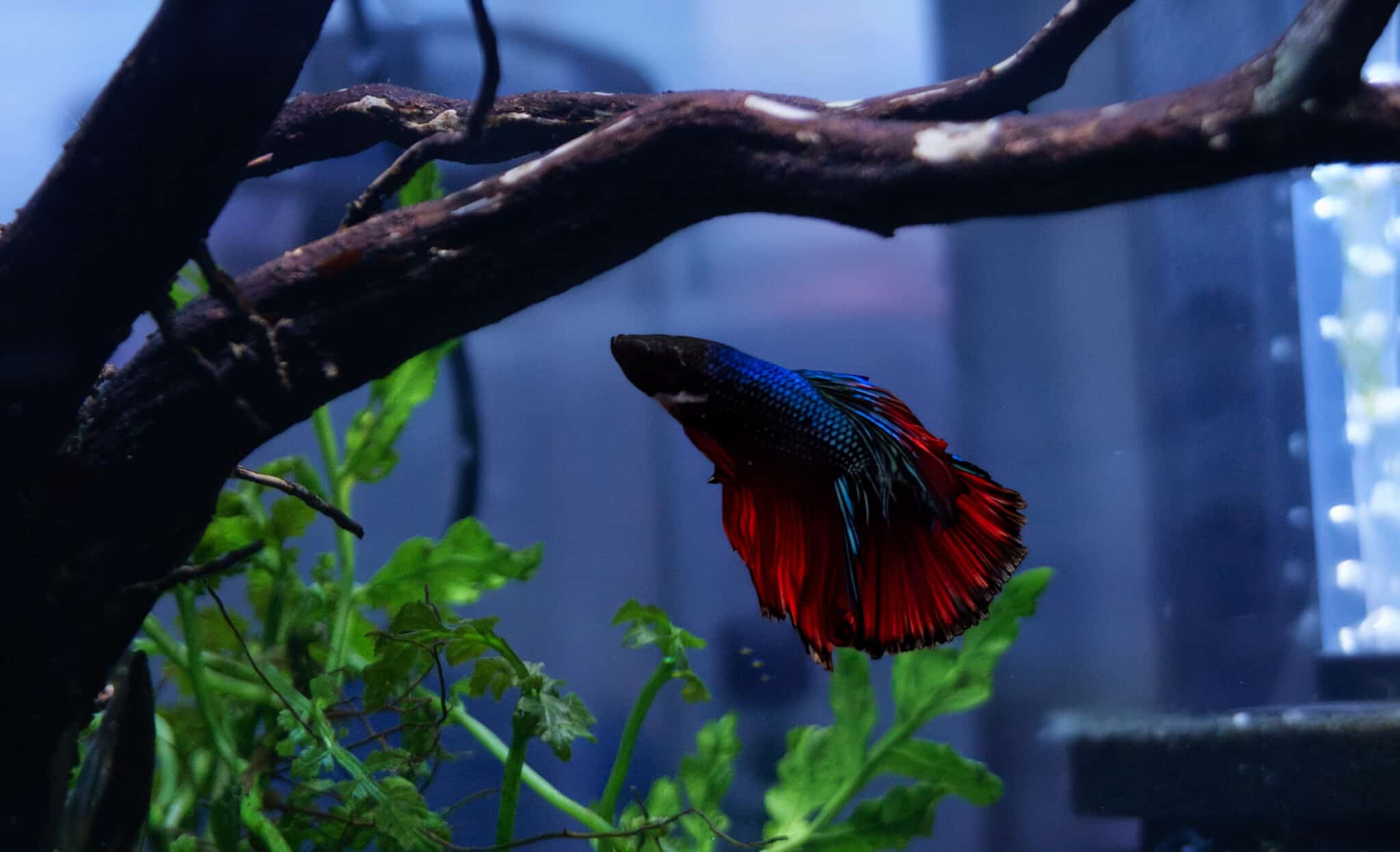
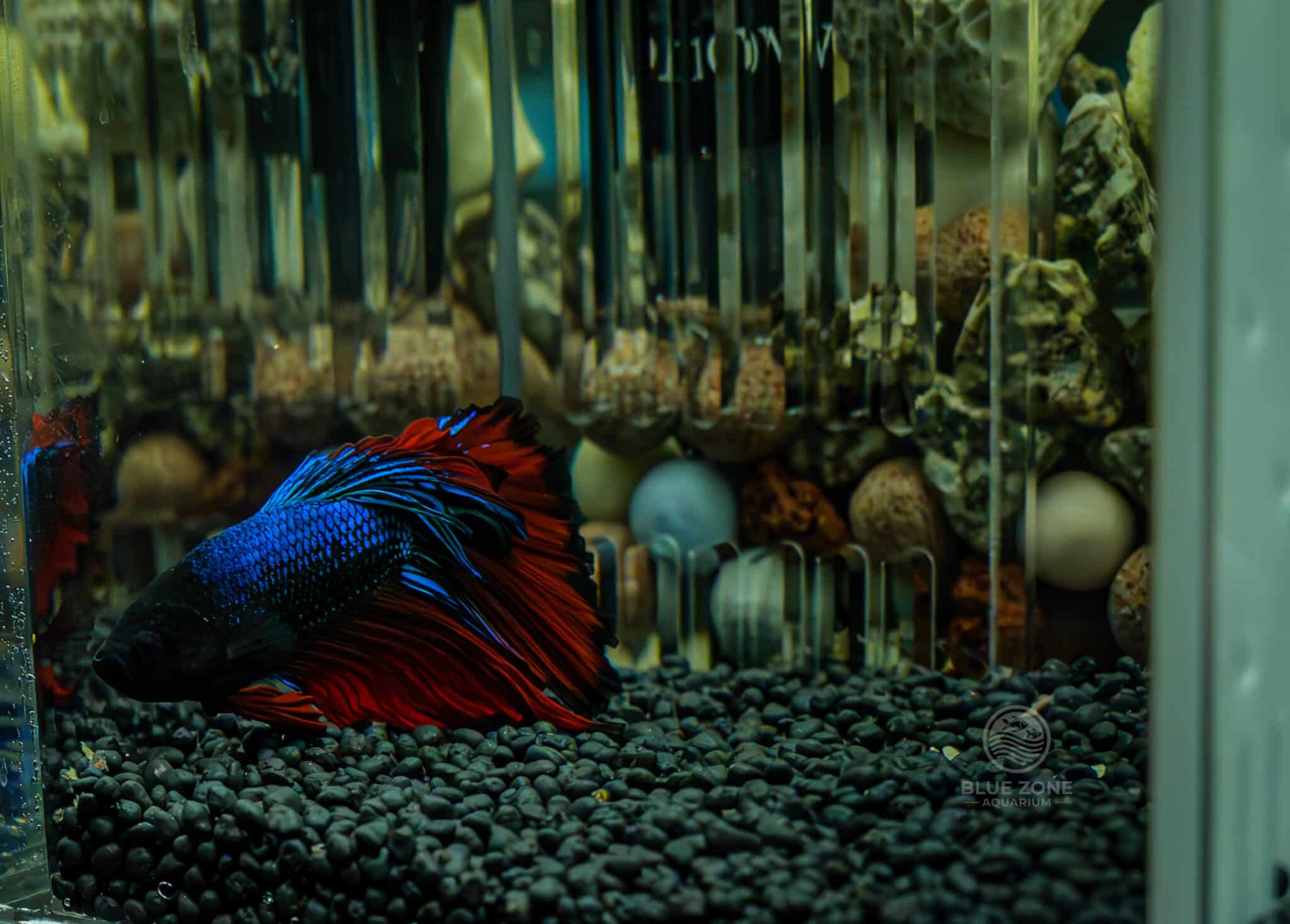
Red and Blue Halfmoon Betta – Betta splendens – Breeder Selected Show Grade
Species Background
The Butterfly Halfmoon is a selectively bred ornamental form of Betta splendens, originally derived from wild populations in Thailand and surrounding Southeast Asia.
The “Halfmoon” refers to the tail spreading to a full 180-degree arc when flared.
The “Butterfly” refers to the distinct two-tone fin pattern, where the outer edge of the fins contrasts sharply with the base color.
This is a line-bred show fish, not a wild morph. Modern strains are fully adapted to aquarium life and tolerate a broader range of water conditions than wild Betta forms.
Behavior and Temperament
• Males are territorial toward other male Bettas
• Generally peaceful toward non-fin-nipping tankmates
• Interactive and responsive to people
• Active mid-to-top swimmer
They are bold, aware of their environment, and often recognize feeding routines. Long fins mean they are not built for high-flow systems.
Adult Size
Adults typically reach 2.5 to 3 inches in body length.
With full finnage extended, they appear much larger.
Water Parameters
Temperature
• Ideal: 78 to 82°F
• Safe range: 76 to 84°F
pH
• 6.0 to 8.0
GH
• 3 to 15 dGH
KH
• 2 to 10 dKH
Tank-bred Bettas adapt well to neutral and moderately hard water. Stability matters more than chasing exact numbers.
Diet
• High-quality Betta pellets as staple
• Frozen or live foods such as brine shrimp, bloodworms, and daphnia
• Occasional insect-based protein sources
They are carnivorous surface feeders and benefit from varied protein sources.
Tank Requirements
Preferred setup
• Gentle filtration
• Low to moderate flow
• Heavily planted or structured layout
• Resting surfaces near the surface
They appreciate floating plants and calm water where their fins are not constantly pushed around.
Compatibility
They coexist well with:
• Small peaceful tetras
• Corydoras
• Snails
• Shrimp (with caution)
Avoid:
• Other male Bettas
• Fin-nippers
• Aggressive or highly active species
Why They’re Popular
These fish are popular because of their dramatic 180-degree tail spread and crisp butterfly coloration.
When flared, they look sculpted. When relaxed, they move like silk in water.
They combine ornamental show quality with manageable care requirements, which is why they remain one of the most requested Betta forms in the hobby.
Reviews
There are no reviews yet.