Description
Red Shoulder Angelfish (Manacapuru Angelfish) – Pterophyllum scalare
Species Background
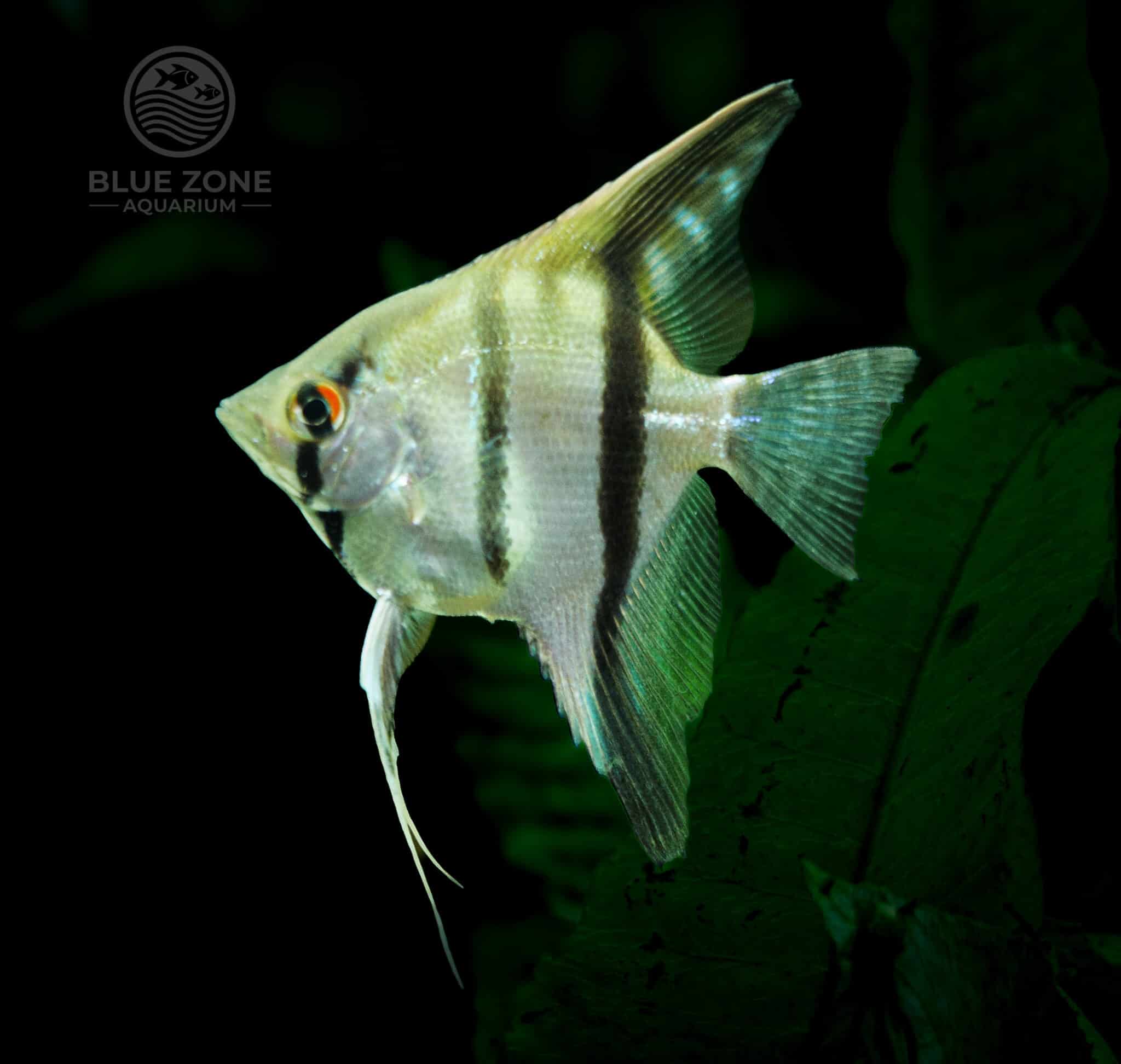
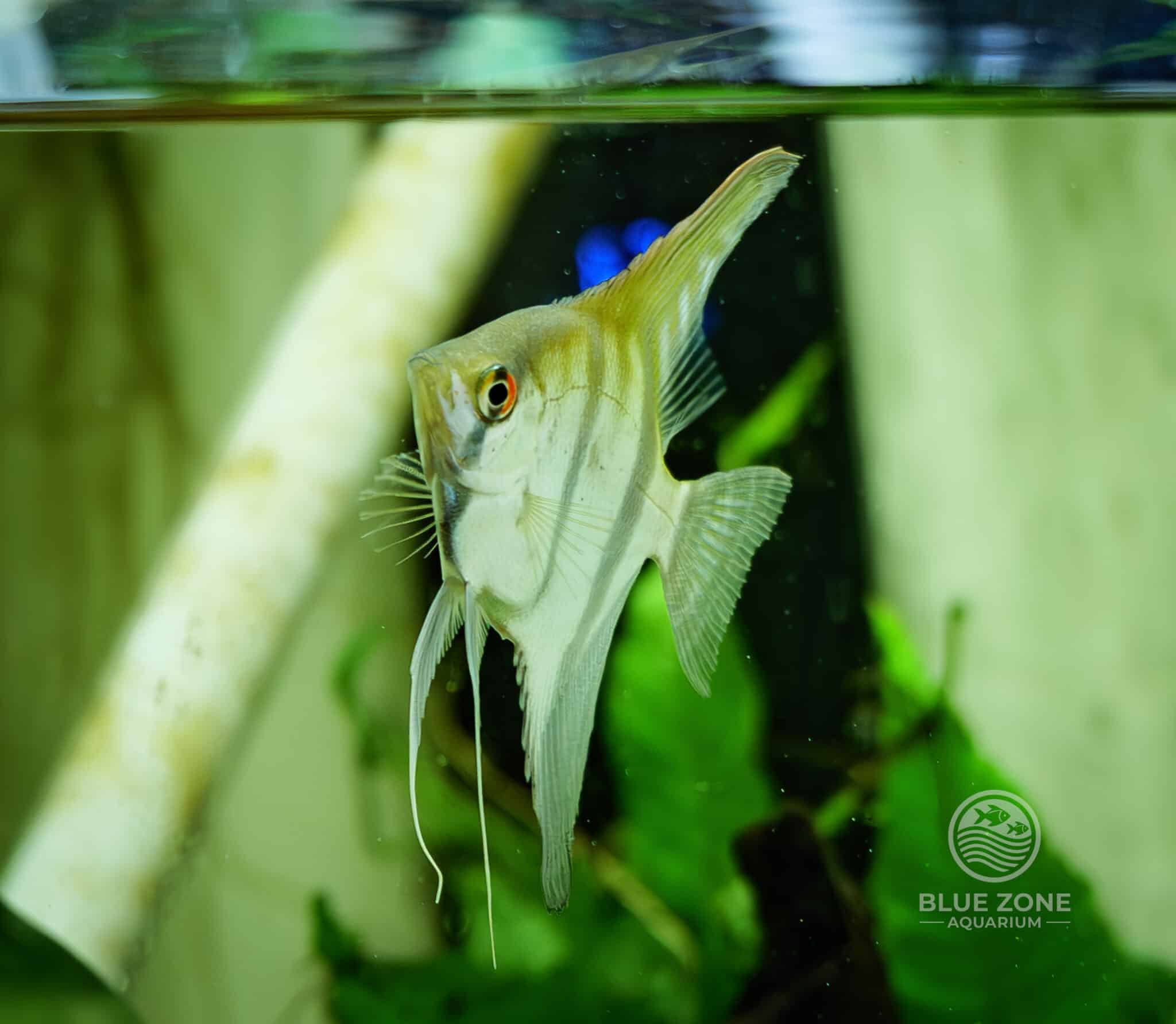
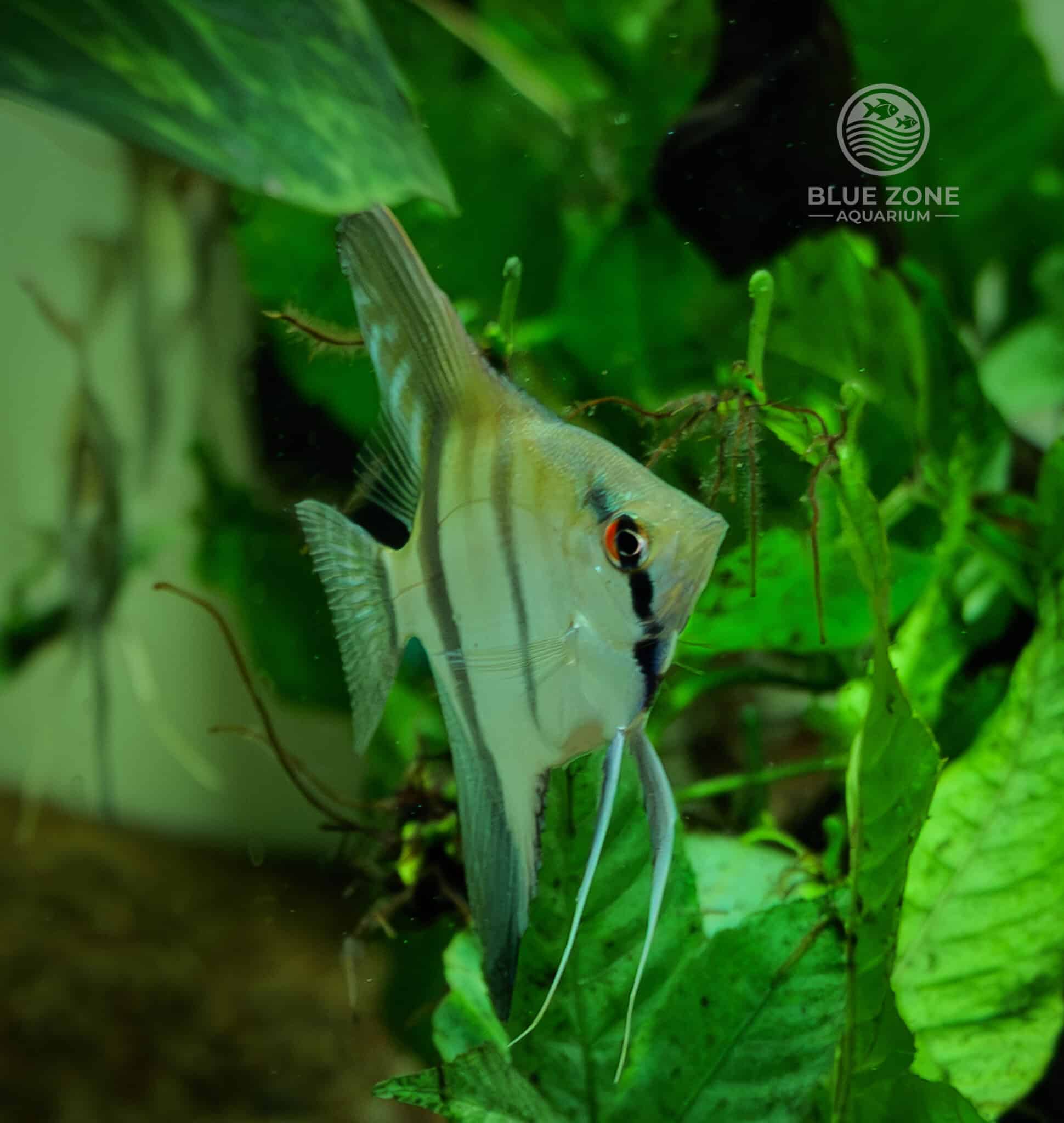
The Red Shoulder Angelfish is a geographic variant of Pterophyllum scalare originating from the Rio Negro region near the town of Manacapuru in Brazil. This population is known for developing a distinctive orange-red patch across the upper shoulder behind the gill plate as the fish mature. Compared with many heavily line-bred angelfish, Manacapuru forms retain a more natural body profile with tall finnage and strong vertical barring.
Behavior and Temperament
Like other angelfish, Red Shoulder Manacapuru are calm but territorial cichlids. They establish loose hierarchies as they grow and may form breeding pairs that defend vertical spawning sites such as plant leaves, driftwood, or aquarium glass. Outside of breeding behavior they are generally peaceful with similarly sized community fish and spend much of their time cruising midwater.
Adult Size
Mature individuals reach approximately 8–10 inches in total height from the tip of the dorsal fin to the tip of the anal fin.
Current Size
These juveniles are approximately 2–3 inches tall.
Water Parameters
Temperature
78–84°F
pH
5.5–7.5
GH
1–8 dGH
KH
0–4 dKH
Diet
Red Shoulder Angelfish are omnivores. A high-quality cichlid pellet or flake should form the foundation of their diet, supplemented with frozen or live foods such as bloodworms, mysis shrimp, and brine shrimp. A varied diet supports healthy growth and strong coloration as the fish mature.
Tank Requirements
A 40-gallon aquarium or larger is recommended for a pair, with larger tanks preferred for groups. Because angelfish grow tall rather than long, tank height matters. Adults can reach 8–10 inches in total height, so aquariums with 18–24 inches of vertical space allow them to display their full finnage comfortably. Driftwood, plants, and vertical structures help recreate the calm flooded-forest habitat they naturally occupy.
Compatibility
They coexist well with medium-sized peaceful fish such as larger tetras, Corydoras catfish, peaceful barbs, and dwarf cichlids. Very small fish may be viewed as food, and aggressive species should be avoided.
Color Development
Young Manacapuru angelfish typically do not show the red shoulder coloration at this size. As the fish grow and begin to pillar up into their adult body shape, the orange-red shoulder patch gradually develops and becomes more visible with maturity.
Why They’re Popular
Aquarists enjoy Red Shoulder Angelfish for their elegant shape, natural Rio Negro lineage, and the distinctive red shoulder coloration that develops as they mature. Their graceful movement and classic angelfish profile make them a standout centerpiece fish in planted aquariums.
Reviews
There are no reviews yet.